



Surat Thani City Guide: More Than Just a Transit Hub
Surat Thani is often treated as a transfer point for the Gulf islands. Give the city a little time, though, and its old-town lanes, night food, riverside views and everyday southern character begin to come into focus.
This Surat Thani city guide is for travellers with an afternoon, an evening or a full day before moving on. The city is not trying to be a beach destination. Its appeal is quieter: a meal chosen from a busy street stall, a slow walk beside the river and the chance to see a working provincial capital on its own terms.
Start with the city, not the timetable
Surat Thani is the provincial capital on Thailand’s southern mainland. It is a useful gateway to Koh Samui, Koh Phangan and Koh Tao, but its mainland setting has a different rhythm from the islands. The Tourism Authority of Thailand also points visitors towards the province’s local food, the Tapee River and inland experiences, from old-town streets to communities along the waterways.
For a short stay, keep the plan simple. Spend the late afternoon around the old town and river, visit the City Pillar Shrine with appropriate dress and behaviour, then make San Chao Market the centre of your evening. A full day leaves room for street art, a longer riverside walk and a pre-arranged visit to the nearby Bang Bai Mai community.
The river is sometimes transliterated as the Tapi. In this guide, Tapee follows the spelling used by the Tourism Authority of Thailand’s provincial destination page.
Walk the old town and San Chao Market
The old town around Talat and the shrine market is the best place to understand why Surat Thani deserves more than a transit stop. The Tourism Authority of Thailand identifies Talat San Chao, also called San Chao Market or Surat Thani Night Market, as a food market in Mueang Surat Thani. Its name comes from its location near a shrine, and stalls line a small lane in the evening.
Come with an appetite rather than a rigid checklist. The official listing notes local food alongside familiar market dishes, including pad Thai, fish balls, fried mushrooms and rice-noodle dishes. The broader province is known for southern Thai flavours, including khanom chin rice noodles with curry, seafood and local sweets. Ask vendors what is prepared fresh that day and be open to sharing a few small dishes.
The market is part of a larger neighbourhood, not an isolated attraction. Before or after eating, wander the nearby older streets at an unhurried pace. The Tourism Authority’s mainland itinerary also includes Surat Thani Street Art in Talat Lang, where murals bring local scenes into old lanes. This is a good area for looking rather than rushing, especially if you have arrived from a long bus, ferry or train journey.
Practical note: Do not build a plan around published market hours. Stall numbers and operating times can change, so check locally on the day, particularly during rain or public holidays.
Visit Surat Thani City Pillar Shrine with care
Surat Thani City Pillar Shrine is a civic and religious landmark in Talat Subdistrict. The Tourism Authority of Thailand classifies it as a place of worship and describes its Srivijaya-style design. Its wooden city pillar is carved with detailed floral motifs, while the upper section incorporates a four-faced Avalokitesvara Bodhisattva looking in the four directions.
The shrine is worth visiting not only for the architecture but also for the way it sits within the city’s daily life. Take a moment to observe before taking photographs. Dress respectfully, keep your voice low and follow any instructions on site. It is better understood as an active place of reverence than as a photo stop.
From the shrine area, it is easy to continue towards the riverfront rather than doubling back immediately. This creates a natural route from the old town’s food culture to the city’s most important waterway.
See the Tapee River from the bridges and riverfront
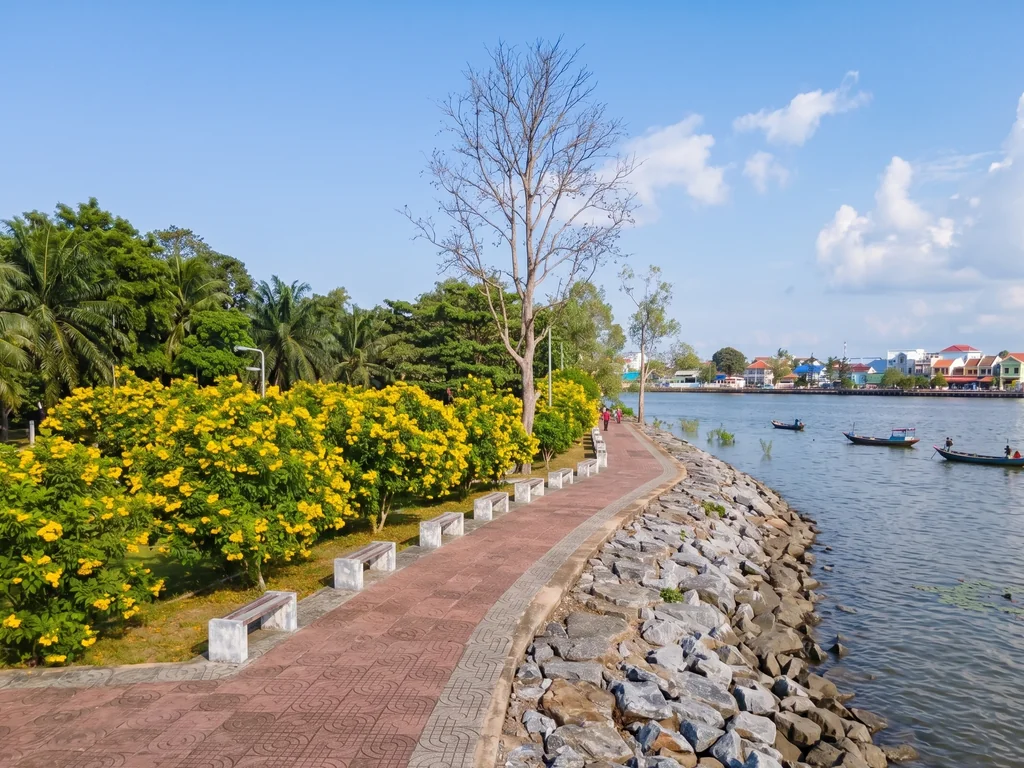
The Tapee River shapes Surat Thani’s identity. It flows through the city before reaching the Gulf of Thailand, and it has long connected the town with communities, fishing and trade further inland and along the coast.
For an accessible river view, head towards Sri Tapi Bridge. The Tourism Authority of Thailand describes a pedestrian path on the bridge, with views of the Tapee River, Koh Lamphu and the sunset. It is a straightforward place to pause after the market area, particularly when the light softens near evening.
Koh Lamphu, also written Ko Lamphu, is the green island in the river that many visitors notice from the bridge and riverfront. It is commonly associated with public park space, but access routes and on-site conditions can change. Check current local information before planning a visit there, rather than assuming a particular entrance, activity or operating schedule.
The river can also lead you beyond the city centre. The Tourism Authority of Thailand describes Bang Bai Mai, in Mueang Surat Thani District, as a waterside community with a network of small canals that join the Tapee. Local community operators offer boat trips through the vegetation and waterways. Arrange this kind of visit in advance, and confirm the route, weather suitability, meeting point and what is included directly with the community or a current local contact.
That is a more reliable approach than expecting an on-demand longtail cruise from the city riverfront. Likewise, do not promise a firefly sighting as part of a city itinerary. Wildlife and water conditions are seasonal, and no current official operator information was verified for a regular city firefly cruise.
What to eat in Surat Thani
San Chao Market is the easy evening answer, but it should not be the only food stop. Surat Thani’s food culture is tied to the southern mainland, where coconut-rich curries, herbs, seafood and rice noodles appear in everyday meals.
Look for khanom chin, thin fermented rice noodles served with curries and fresh vegetables. If you see a busy breakfast shop, that is often the right setting to try it. Seafood is also a provincial staple, though the best choice depends on where you are and what has arrived that day. The Tourism Authority of Thailand specifically highlights local sweets, khanom chin and seafood around the Tapee River as part of the province’s food identity.
A useful rule is to order by observation. Choose stalls with a quick turnover, point to dishes that look appealing and ask about spice before committing to a curry. Southern food can be genuinely hot, and a smaller first order is sensible if you are unsure.
A practical one-day Surat Thani itinerary
If you have one clear day in the city, use this as a flexible outline rather than a schedule to race through:
- Morning: Find a local breakfast and explore the old-town lanes around Talat and Talat Lang. Look for Surat Thani Street Art as you walk.
- Midday: Visit Surat Thani City Pillar Shrine. Keep the visit quiet and respectful.
- Afternoon: Walk or take local transport towards the riverfront and Sri Tapi Bridge. Enjoy the view across the Tapee River towards Koh Lamphu.
- Evening: Return to San Chao Market for a progressive dinner of small dishes and sweets.
- If you have another half-day: Research and pre-arrange a community visit in Bang Bai Mai rather than adding an unverified river activity at the last minute.
This route works because the stops are connected by theme. Food, older streets, a civic shrine and the river tell a fuller story of Surat Thani than a checklist of distant attractions.
Where to stay for a city-focused visit
For travellers who want to spend time in town before an onward journey, staying centrally makes the day easier to manage. Blu Monkey Hub & Hotel Suratthani is on Karunarat Road in Talat, Mueang Surat Thani District. The hotel’s official site places San Chao Market, Surat Thani City Pillar Shrine and Koh Lamphu Public Park nearby, while its group site describes the property as a central Surat Thani design hotel with a modern loft style inspired by bicycles.
The official rooms page lists Chimpanzee Pod king and twin options, Gorilla Pod private bunk beds for up to four guests with a shared bathroom, Orangutan Pod with an extra bed, and Chimpanzee Con connecting rooms. For a late arrival or an early departure, the 24-hour Monkey Desk can assist with local tips and transport enquiries. The hotel also describes its Barnana Zone as offering all-day complimentary snacks and drinks, and its Monkey Hub as a workspace with high-speed Wi-Fi, private offices, meeting rooms and flexible space.
Those details make sense for a city stay, but confirm current room configurations, services and transport arrangements when booking. They can change, and the best plan is one that leaves you enough time to enjoy Surat Thani itself.
Give Surat Thani an evening of its own
Surat Thani does not need to compete with the islands. It offers a different kind of pause, one that rewards attention to local routines. Walk the older streets, eat at San Chao Market, stand over the Tapee River at dusk and let the city set the pace.
If you are passing through, stay the night with a purpose. You may still catch the next ferry or bus, but you will leave with more than a transfer ticket.